
Providing trusted plumbing solutions for homes, businesses, and the community we proudly serve.
The Smarter Way to Replace an Old Water Line (No Excavation Required)


No-Surprise Pricing
You’ll know the full price before we start – flat-rate, in writing, with zero hidden fees or upsells.
Fixed Right – Guaranteed
Licensed plumbers who get it right the first time and stand behind the work. If it’s not fixed, we come back.
Same-Day Emergency Service
Burst pipe or no hot water? We answer fast and get a plumber to your door the same day – often within hours.
2-Year Warranty
Our commitment doesn’t end when we pack up our tools. We warranty all parts and labor on every job, starting at 2 years, giving you lasting confidence in your home.
No-Surprise Pricing
You’ll know the full price before we start – flat-rate, in writing, with zero hidden fees or upsells.
Fixed Right – Guaranteed
Licensed plumbers who get it right the first time and stand behind the work. If it’s not fixed, we come back.
Same-Day Emergency Service
Burst pipe or no hot water? We answer fast and get a plumber to your door the same day – often within hours.
2-Year Warranty
Our commitment doesn’t end when we pack up our tools. We warranty all parts and labor on every job, starting at 2 years, giving you lasting confidence in your home.
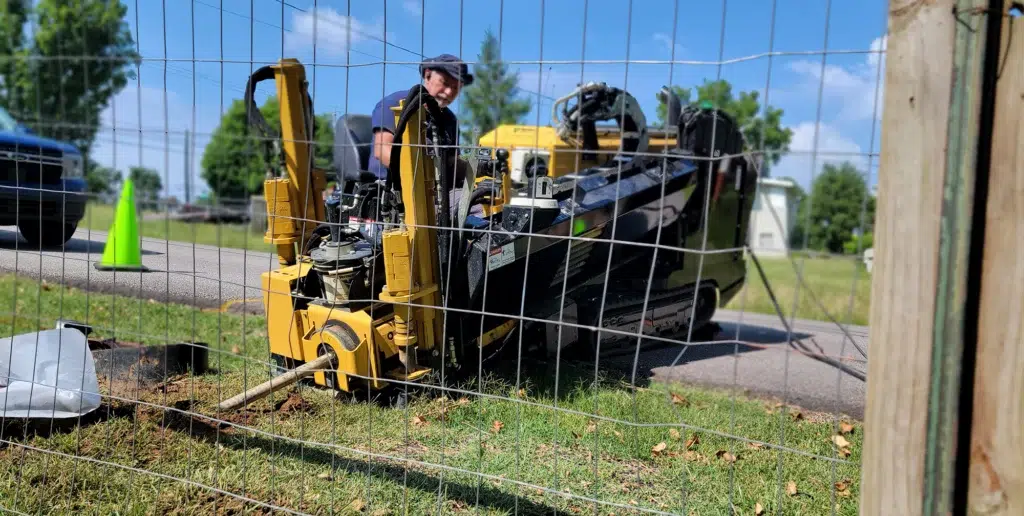
If your home is more than 40 or 50 years old, there’s a good chance the water line running from the street to your house has never been replaced.
The Knoxville plumbers at The Plumbing Authority sees this constantly across East Tennessee: aging galvanized steel pipes quietly deteriorating underground, doing their job until they really aren’t.
When homeowners find out replacement is necessary, the first concern is almost always the same: “Does that mean they’re going to dig up my entire yard?”
Not necessarily.
What’s Actually in the Ground
Homes built before the 1970s were typically plumbed with galvanized steel water lines. Galvanized pipe is steel coated in zinc, which was a reasonable solution at the time. The problem is that zinc coating wears down over decades, and once it does, the steel underneath starts to corrode.
That corrosion does two things:
- It narrows the interior diameter of the pipe, which reduces water pressure throughout the house
- It creates rough, flaking surfaces where rust and mineral deposits accumulate over time
The bigger concern is lead. Many older homes had lead solder or lead components at joints and fittings. Even pipes that aren’t made of lead can carry trace amounts if they’re connected to lead components anywhere along the line. The EPA has been clear that there’s no safe level of lead exposure, particularly for children and pregnant women.
Signs your water line may be on its way out:
- Discolored or rust-tinted water at the tap
- Noticeably lower water pressure than you used to have
- Unexplained spikes in your water bill (a possible sign of a slow underground leak)
- Recurring issues across multiple fixtures at once
- A home that’s 50+ years old with no record of water line work
What Trenchless Replacement Actually Means
Traditional water line replacement involves digging a trench the full length of the pipe run, from the street connection to where it enters your foundation. That can mean tearing up landscaping, driveways, sidewalks, or some combination of all three.
Trenchless methods accomplish the same result through two small access points, one at each end of the existing pipe, with no continuous excavation in between. There are two main approaches:
Pipe Bursting
A bursting head is pulled through the old pipe, fracturing it outward while simultaneously pulling a new, flexible pipe into place behind it. The old pipe is destroyed and displaced; the new one takes its position. This works well when the existing line runs in a reasonably straight alignment.
Pipe Lining (CIPP)
An epoxy-saturated liner is inserted into the existing pipe and cured in place, creating a new pipe inside the old one. This is better suited to pipes that are corroding but still structurally intact enough to support the liner.
Which method makes sense depends on your specific situation. A sewer inspection using a camera scope is typically the first step, since it gives a clear picture of what’s happening inside the pipe before any decisions are made.
What You’re Getting With the New Pipe
Modern water lines use high-density polyethylene (HDPE) or cross-linked polyethylene (PEX), both of which are far more durable than galvanized steel and completely free of corrosion issues. They’re also flexible, which means they handle ground movement and freeze-thaw cycles better than rigid pipe.
HDPE in particular has an expected service life of 50 to 100 years under normal conditions. You’re replacing aging infrastructure with something that should outlast your ownership of the home.
How the Cost Compares to Traditional Excavation
Trenchless replacement typically costs more per linear foot than conventional digging, and it’s worth being upfront about that. Where it often evens out, or comes out ahead, is in the total project cost once you factor in:
- Landscape restoration
- Concrete cutting and repaving
- The added labor time of a full excavation
For homes with mature trees, finished landscaping, or hardscaped areas, the savings on the back end can be significant. It’s also faster: a trenchless job that might otherwise take several days of digging and restoration can often be completed in a single day.
When to Get It Checked
If you’re dealing with recurring drain or sewer issues in Knoxville, low pressure throughout the house, or visible signs of pipe corrosion, it’s a good time to get a professional assessment. The same applies if you’re purchasing an older home and want to know what you’re working with before closing.
Water line problems don’t usually announce themselves until they’re urgent. A slow underground leak can run for months before it surfaces, and by then you’ve lost water and money you can’t recover.
Ready to Find Out What’s Going On With Your Water Line?
If you’re in Knoxville or anywhere in the East Tennessee area, The Plumbing Authority can assess your current setup, walk you through your options, and help you decide whether trenchless replacement is the right call for your home.
Knoxville’s Trusted Plumbers Just Around the Corner
As your go-to plumber in Knoxville, TN, we’re proud to take care of our neighbors. Whether you’re right in the city or just outside of it, we’re already helping folks nearby in the following areas:
 All Service Areas