Providing trusted plumbing solutions for homes, businesses, and the community we proudly serve.
Is Your Water Heater Secretly One of Your Biggest Energy Hogs?


No-Surprise Pricing
You’ll know the full price before we start – flat-rate, in writing, with zero hidden fees or upsells.
Fixed Right – Guaranteed
Licensed plumbers who get it right the first time and stand behind the work. If it’s not fixed, we come back.
Same-Day Emergency Service
Burst pipe or no hot water? We answer fast and get a plumber to your door the same day – often within hours.
2-Year Warranty
Our commitment doesn’t end when we pack up our tools. We warranty all parts and labor on every job, starting at 2 years, giving you lasting confidence in your home.
No-Surprise Pricing
You’ll know the full price before we start – flat-rate, in writing, with zero hidden fees or upsells.
Fixed Right – Guaranteed
Licensed plumbers who get it right the first time and stand behind the work. If it’s not fixed, we come back.
Same-Day Emergency Service
Burst pipe or no hot water? We answer fast and get a plumber to your door the same day – often within hours.
2-Year Warranty
Our commitment doesn’t end when we pack up our tools. We warranty all parts and labor on every job, starting at 2 years, giving you lasting confidence in your home.
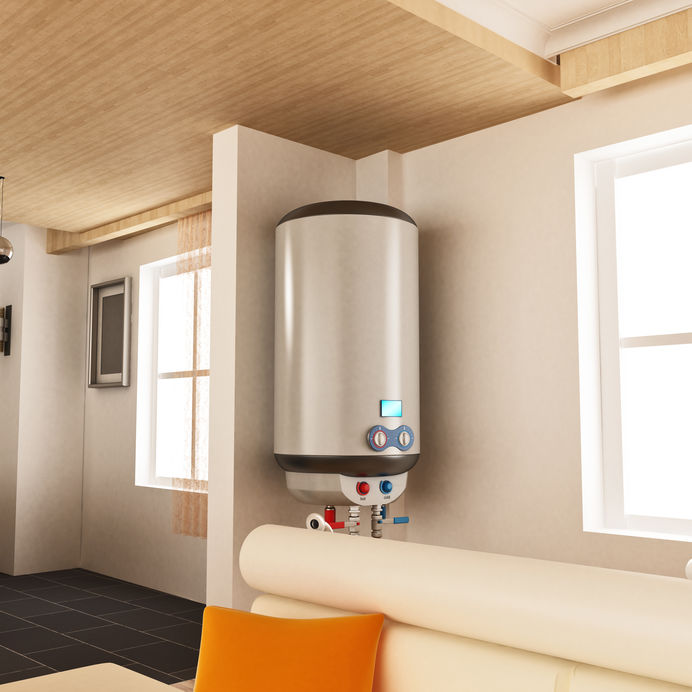
If you’ve been watching your utility bills climb and wondering where all that money is going, your water heater might be more of a culprit than you’d expect. Most Knoxville homeowners don’t think twice about that big tank sitting in the corner of their utility room — until they learn how much it’s actually costing them.
At The Plumbing Authority, our Knoxville water heater experts have had this conversation with hundreds of East Tennessee homeowners, and the numbers usually come as a surprise.
Here’s the short version: according to the U.S. Department of Energy, electric water heaters account for approximately 18 percent of residential energy consumption, making them the second-largest energy-consuming appliance in a home, right behind HVAC equipment.
Meanwhile, a well-sized tankless gas water heater can knock that footprint way down. Here’s why.
The Problem With Traditional Electric Water Heaters
The core issue with a standard electric tank water heater isn’t that it’s doing a bad job. It’s that it never really stops working.
Your tank is constantly heating and reheating the same water to maintain temperature, whether you’re using it or not. Standby losses (the energy used just to keep water hot when nothing’s being drawn) typically account for 20 to 25 percent of a tank water heater’s total energy consumption.
That means a significant chunk of what you’re paying for every month is literally keeping water warm while you’re at work, asleep, or out of town. A typical household in the U.S. spends around $600 a year on water heating, and older heaters run even longer due to deteriorating insulation and sediment buildup at the bottom of the tank.
A typical electric water heater uses between 12 and 15 kWh per day. At average Tennessee electricity rates, that’s a meaningful monthly expense, month after month, year after year, for an appliance most people never think about.
How Tankless Gas Changes the Math
A tankless gas water heater works on a fundamentally different principle. Instead of storing and constantly reheating a tank of water, it heats water on demand, only when you turn on the tap. The burner fires, water flows through a heat exchanger, and hot water arrives within seconds. When you’re done, the unit shuts off completely. No standby losses. No keeping 50 gallons hot at 2 a.m.
In terms of real-world operating costs, the difference is significant. A family of four typically spends about $200 a year heating water with natural gas, compared to around $450 a year with a standard electric water heater. That’s real money back in your pocket every year.
But Aren’t Electric Water Heaters “More Efficient” on Paper?
This is where homeowners sometimes get confused, and it’s worth addressing directly.
Standard electric tank water heaters do carry relatively high efficiency ratings (typically 0.90 to 0.95 UEF) because they convert nearly all the electricity they consume directly into heat. On paper, that looks comparable to some gas tankless units.
Here’s the catch: electricity costs significantly more per unit of energy than natural gas. So even when an electric water heater converts energy efficiently, it’s converting expensive energy. A tankless gas unit may show a slightly lower efficiency number, but because natural gas is cheaper per BTU in most markets, including Knoxville, the actual cost to heat your water ends up being substantially lower.
Efficiency ratings matter, but they only tell part of the story. The fuel source matters enormously.
What Else You Get With Tankless Gas
Beyond the energy savings, there are real quality-of-life benefits that Knoxville homeowners consistently appreciate after making the switch:
- Unlimited hot water. With a tank system, you have a fixed supply. Once it’s gone, you’re waiting for recovery. With an on-demand gas unit, hot water keeps flowing for as long as you need it, which is a big deal for larger households or back-to-back morning showers.
- More space. Most tankless units are wall-mounted and compact, a fraction of the size of a traditional tank.
- Longer lifespan. Tankless water heaters are built to last at least 20 years, compared to the 10 to 15 years you typically get from a tank-style heater.
- Lower long-term cost. Higher upfront investment, yes. But between energy savings and fewer replacements over time, most homeowners come out well ahead.
One thing to keep in mind: tankless units need periodic attention to stay at peak efficiency. Descaling to remove mineral buildup is part of routine water heater maintenance, and it’s worth staying on top of, especially given East Tennessee’s water conditions.
Is Tankless Gas Right for Your Home?
Not every home is the same, and the switch isn’t always straightforward. Homes without an existing gas line will need that factored into the installation plan. Your household size, daily hot water habits, and current water heater setup all play a role in finding the right fit.
That’s exactly the kind of conversation The Plumbing Authority is here for. We’ve served Knoxville and the surrounding East Tennessee area for over 30 years, and we know how to match the right system to each home’s specific needs, not just whatever’s fastest or cheapest to install.
Ready to stop overpaying on your utility bills?
Reach out to us and we’ll give you straight answers and upfront pricing so you can make the right call for your household.
Knoxville’s Trusted Plumbers Just Around the Corner
As your go-to plumber in Knoxville, TN, we’re proud to take care of our neighbors. Whether you’re right in the city or just outside of it, we’re already helping folks nearby in the following areas:
 All Service Areas