Providing trusted plumbing solutions for homes, businesses, and the community we proudly serve.
Why Is My Water Pressure So Low? Common Causes for Knoxville Homes


No-Surprise Pricing
You’ll know the full price before we start – flat-rate, in writing, with zero hidden fees or upsells.
Fixed Right – Guaranteed
Licensed plumbers who get it right the first time and stand behind the work. If it’s not fixed, we come back.
Same-Day Emergency Service
Burst pipe or no hot water? We answer fast and get a plumber to your door the same day – often within hours.
2-Year Warranty
Our commitment doesn’t end when we pack up our tools. We warranty all parts and labor on every job, starting at 2 years, giving you lasting confidence in your home.
No-Surprise Pricing
You’ll know the full price before we start – flat-rate, in writing, with zero hidden fees or upsells.
Fixed Right – Guaranteed
Licensed plumbers who get it right the first time and stand behind the work. If it’s not fixed, we come back.
Same-Day Emergency Service
Burst pipe or no hot water? We answer fast and get a plumber to your door the same day – often within hours.
2-Year Warranty
Our commitment doesn’t end when we pack up our tools. We warranty all parts and labor on every job, starting at 2 years, giving you lasting confidence in your home.
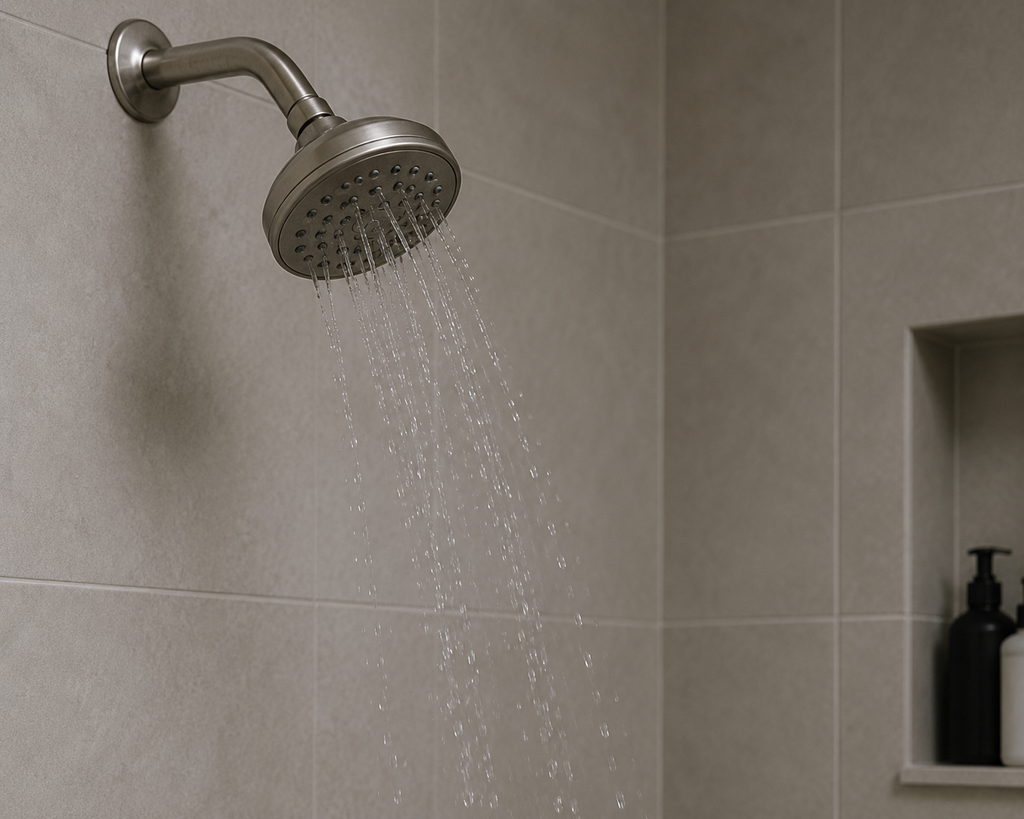
Low water pressure is one of those problems you put up with until you can’t. The shower loses its punch, the washer takes forever to fill, and running the dishwasher while someone’s in the shower becomes a negotiation.
If that sounds like your house, the good news is that weak pressure almost always traces back to a specific, fixable cause.
The licensed Oak Ridge and Knoxville plumbers at The Plumbing Authority work on pressure problems across East Tennessee, and here’s how to figure out what’s behind yours.
What Counts as Low Water Pressure
Most homes run comfortably between 40 and 60 psi (pounds per square inch). Below about 40, you start to notice weak showers and slow-filling fixtures. You can check your own pressure with an inexpensive gauge that screws onto an outdoor spigot. Turn off anything using water inside, thread the gauge on, open the spigot, and read the number.
If it’s well under 40, you’ve confirmed the problem is real. If it reads above 80, that’s a different issue worth addressing, since pressure that high wears out fixtures and appliances early.
First, Rule Out a Clogged Fixture
Before assuming the whole house is affected, check whether the weak pressure shows up everywhere or at just one faucet. If it’s only the kitchen sink or one bathroom, the culprit is usually a clogged aerator, the little screen at the tip of the faucet.
Knoxville’s moderately hard, mineral-rich water leaves behind scale and grit that slowly plug those screens. Unscrew the aerator, rinse out the debris, soak it in vinegar if it’s crusty, and reinstall it. That five-minute fix solves a surprising number of low-pressure complaints.
A Failing Pressure Reducing Valve
Many Knoxville homes have a pressure reducing valve (PRV) where the main line enters the house. It keeps the municipal supply from pushing too much pressure into your pipes. When a PRV starts to fail, it can throttle your pressure down across the whole house, often gradually enough that you don’t notice until showers feel weak everywhere at once. A PRV usually lasts about 10 to 15 years, so if yours is older and pressure has dropped house-wide, it’s a strong suspect.
Aging or Corroded Pipes
If your home was built before the 1970s, and plenty of Knoxville homes were, there’s a good chance it once had galvanized steel supply lines. Over the decades, those pipes corrode and scale up from the inside, narrowing the path water can travel. The result is pressure that’s fine at the meter but weak at the tap.
Our region’s mineral-rich water speeds this along, leaving deposits that build up on pipe walls and inside fixtures over the years. A whole-home water softener slows that buildup and protects the plumbing you have. When the pipes themselves are too far gone, repiping with modern copper or PEX restores flow and puts the pressure problem behind you for good.
A Hidden Leak
A leak somewhere in your supply line bleeds off pressure before the water ever reaches your faucets. If your pressure dropped suddenly rather than fading over months, a leak is one of the first things to consider, especially if you’ve also noticed a higher water bill, damp spots, or the sound of running water when everything’s off. These leaks often hide underground or inside walls, which is why professional leak detection and repair matters. Finding the exact spot means we fix the leak, not your drywall.
When It’s Only the Hot Water
If cold water runs fine but hot water trickles, the problem points to your water heater. Sediment builds up at the bottom of the tank over time, and in a mineral-rich water area like ours it accumulates faster. That buildup can restrict flow and even clog the lines running out of the heater.
Flushing the tank on a regular schedule helps, but if hot-side pressure has fallen off, it’s worth having your water heater inspected before the sediment causes bigger trouble.
How to Narrow It Down Yourself
A little detective work before you call helps a plumber zero in fast. Run through these steps:
- Check whether the weak pressure affects the whole house or just one fixture.
- Clean the aerator on any affected faucet and see if it improves.
- Note whether it’s the hot water, the cold, or both.
- Screw a pressure gauge onto an outdoor spigot and record the reading.
- Look at your recent water bills for an unexplained jump that might signal a leak.
When to Call The Plumbing Authority
If you’ve cleaned your aerators and your pressure is still weak across the house, the cause is usually deeper in the system, and that’s where a licensed plumber in Oak Ridge or Knoxville saves you time and guesswork. Our team tracks down the real reason your pressure is off, explains what we find in plain language, and lays out your options with upfront pricing before any work starts.
Get Your Water Pressure Back
You shouldn’t have to plan your morning around a weak shower. If low pressure has worn out its welcome, reach out to The Plumbing Authority to book an appointment. We’ll find what’s holding your water back and get every tap in your Knoxville home flowing the way it should.
Knoxville’s Trusted Plumbers Just Around the Corner
As your go-to plumber in Knoxville, TN, we’re proud to take care of our neighbors. Whether you’re right in the city or just outside of it, we’re already helping folks nearby in the following areas:
 All Service Areas